
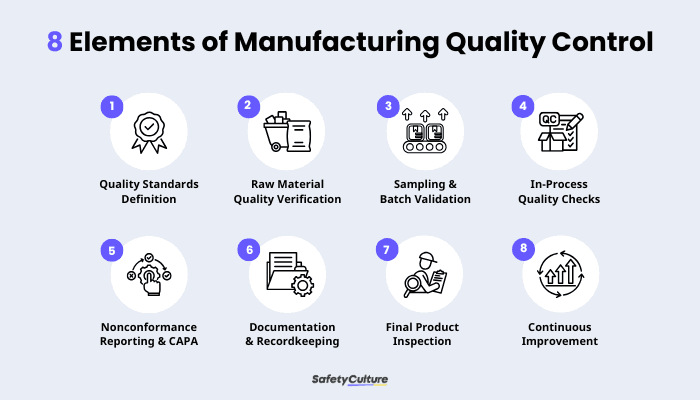
In contemporary production, the issue of consistency in quality is no longer a choice, it is a competitive requirement. Global supply chains, multiple suppliers, and growing customer demands all mean that even the smallest defects can result in expensive recalls, compliance problems, and a damaged reputation. Companies are moving away towards responsive quality checks and towards proactive systems that detect threats before they happen and provide stability in processes.
Structured audit systems come in here. Audits are not sufficient. In order to be able to provide the real guarantee of product reliability and process efficiency, manufacturers should incorporate inspection mechanisms into their audit frameworks. This combination forms a strong system that does not only detect problems but also avoids repeat problems.
The Role of Inspection in Strengthening Audit Systems
A Manufacturing process audit measures the quality of production systems, workflows and controls. It is aimed at detecting inefficiencies, process variation, and compliance gaps. Nonetheless, audits tend to be macro-involving the evaluation of systems and not individual product performance.
This is where inspection is of importance. Micro level inspection is used to confirm that the output is of the required quality. Once inspection is incorporated in audit systems, it gives real time evidence of whether the processes are in fact yielding the desired results.
As an illustration, an audit can establish that a production line is operating according to the standard operating procedures. However, the only way to tell whether the end product has defects or not is through inspection. They form a closed-loop system together where processes are constantly validated and enhanced.
Bridging the Gap Between Process and Product Quality
The lack of connection between process compliance and product quality is one of the largest issues in the manufacturing process. A process can look ideal on paper, but still yield uneven results because of factors such as human error, machine calibration or variation in raw materials.
Inspection is one of the feedback mechanisms that fill this gap. It assists manufacturers to respond to important questions including:
- Is the consistency of output of the processes?
- Are there any defects that are not detected during process checks?
- In real production situations, where do deviations take place?
Using inspection data in the audit findings, companies will be able to shift their assumptions-led decisions to data-driven improvements.
Early Defect Detection and Cost Reduction
It can be very costly to identify defects later in the production process or when the shipment has already been made. It entails rework, returns, logistics expenses and possibly a loss of customer trust.
In the case of inspection being a component of the audit system, defects are detected at an early stage of the production cycle. This enables:
- Short-term remedial measures.
- Reduced wastage and rework
- Lower operational costs
- Better manufacturing efficiency.
Early detection also enables the manufacturers to trace the cause of problems better and thus the audits are more actionable and not just observational.
Enhancing Supplier and Process Accountability
In most industries, there are various suppliers and outsourced production units in the manufacturing process. The challenge is to maintain a steady quality in all these touchpoints.
Audit systems that include inspection enhance accountability at all levels. The evaluation of suppliers does not only rely on the processes of the suppliers but also on the real quality of their output. This brings about a more transparent and performance based ecosystem.
It also assists businesses in standardizing quality expectations among various vendors guaranteeing consistency irrespective of the location or the magnitude of production.
Driving Continuous Improvement
Continuous improvement is the final aim of any audit system. But in the absence of quantifiable data, improvement efforts are usually in a vacuum.
Inspection gives objective measurements, defect rates, percentages of rejection, and quality trends that can be traced directly to the observations in the audit. This helps organizations to:
- Identify recurring issues
- Track improvement over time
- Streamline manufacturing operations.
- Enhance quality standards.
Combining audits and inspections, they help make quality management a dynamic evolving system rather than a standstill.
Conclusion
In the current competitive manufacturing environment, only audits or inspections are not enough. Companies must have a single method that integrates process analysis and product testing. It is at this point that Quality Control Inspection comes in handy.
This allows manufacturers to have greater visibility and control as well as decision making by incorporating inspection into the audit systems. The outcome is not only higher quality of products, but a more sustainable and efficient manufacturing ecosystem that will be able to adjust to the evolving needs and ensure long-term excellence.


